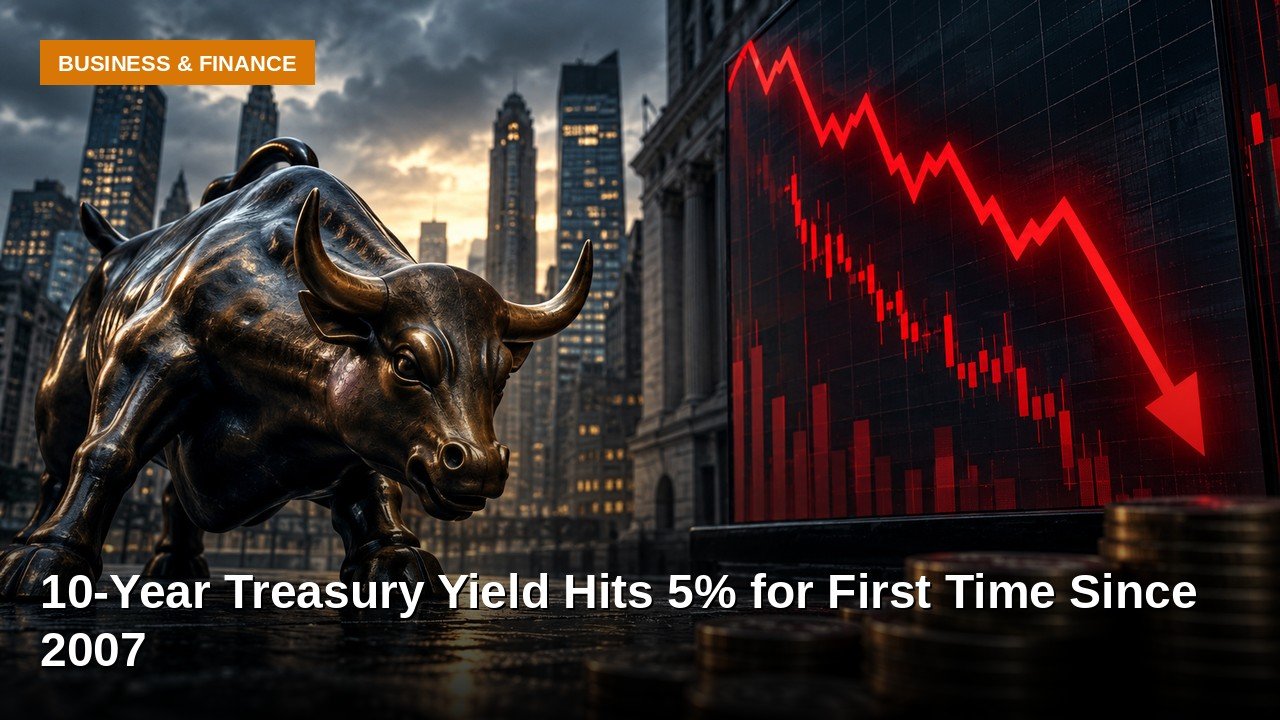
The 10-year US Treasury yield broke above 5% this week for the first time since 2007, a level that quietly rewrites the cost of borrowing for everyone from first-time homebuyers to the US government itself.
What just happened
Yields on the benchmark 10-year note climbed past the 5% mark in trading this week, extending a months-long rise that began as investors grew uneasy about persistent inflation, a swelling federal deficit, and the sheer volume of new government debt hitting the market. The last time yields sat this high, the 2008 financial crisis hadn't even started yet.
Treasury yields move opposite to bond prices, so a rising yield means investors are demanding more return to hold US government debt. That typically happens when they expect inflation to stay elevated, when they think the Federal Reserve will keep rates higher for longer, or when they're worried about how much debt Washington is issuing to fund itself.
Why it's climbing now
A few forces are feeding the move at once. Inflation has proven stickier than many economists hoped, with tariff-related price pressures working their way through consumer goods. The federal deficit keeps widening, forcing the Treasury to auction off more debt, and more supply of bonds tends to push yields higher when demand doesn't keep pace. And with the Fed signaling a cautious, slower pace of rate cuts, traders are repricing how long borrowing costs will stay elevated.
Billionaire investor Ray Dalio has been warning for months that a debt-fueled rise in long-term yields could be the real story markets are underpricing, arguing that no amount of short-term Fed easing can offset a structural oversupply of government bonds. Whether or not you buy that thesis, the yield chart is doing exactly what he flagged.
What it means for your money
Long-term Treasury yields set the floor for a huge range of consumer borrowing costs. Here's where the pinch shows up first:
What markets are watching next
Investors are now focused on upcoming Treasury auctions to see whether demand holds up at these higher yields, along with inflation data and any fresh signals from Fed officials about the pace of future rate moves. Geopolitical developments, including trade negotiations between the US and China, are also feeding into how much risk premium investors are willing to price into long-dated government debt.
For now, 5% is the new line in the sand. Whether yields keep climbing or start to ease back will depend on whether Washington can convince bond investors that the deficit trajectory is manageable, and whether inflation finally cools enough for the Fed to move more decisively.